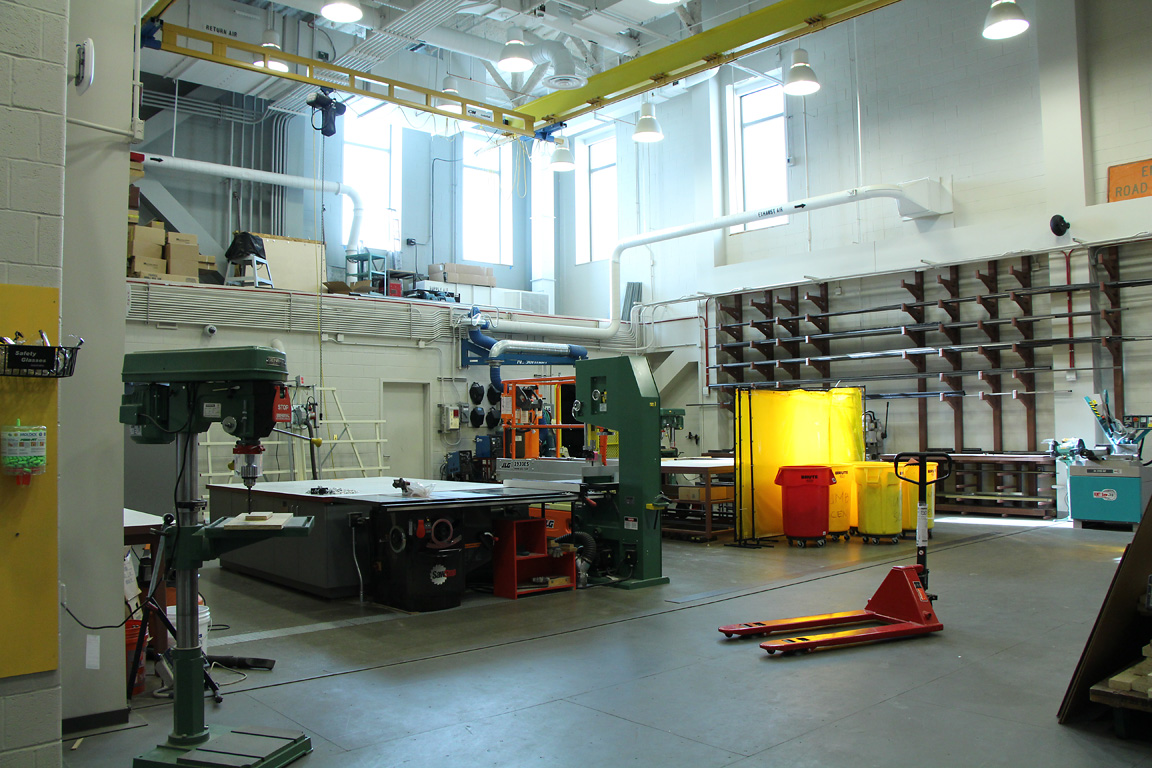
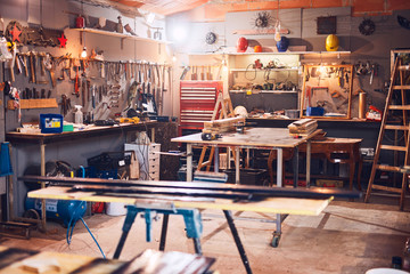
UMBC utilizes shops and maker spaces across campus for a variety of activities, including metal fabrication, woodworking, as well as in research and visual arts. Working in shops routinely involves the operation of powered tools, equipment, and machinery that can present various hazards to shop users, as well as the potential for handling hazardous chemicals such as paints, pigments, and solvents. Hot work activities such as welding, soldering, and grinding can also commonly take place in shops and makerspaces.
The Shop and Makerspace Safety Program establishes safe work standards and guidelines so that UMBC personnel are aware of the hazards in their work area. All shop and makerspace users are highly encouraged to review this program to ensure awareness of shop safety requirements and best practices.
Shop and Makerspace Safety Plans
Units and departments are responsible for developing, implementing and maintaining a shop safety plan for their maker spaces so that critical information and procedures are readily available in the event of an incident or injury.
Maker spaces and studios must establish inspection and maintenance schedules to ensure equipment, tools, and machinery are inspected and maintained or replaced at the necessary frequency to prevent machine breakdown, reduced ventilation effectiveness, and to prevent potential fire hazards.
SOPs and Training
Employees and students shall receive appropriate training to include demonstration of safe and satisfactory operation of assigned equipment under the supervision of a supervisor, faculty, or experienced designee. Training records must be maintained for the duration of the user’s authorization period.
All maker space users must be trained in the use of portable fire extinguishers.
Departments with authority over maker spaces shall develop standard operating procedures (SOPs) or instructions for performing tasks involving maker space equipment, tools, or machinery.
Shop and Makerspace Code of Conduct:
- Only trained, authorized employees or students may operate equipment, tools, or machinery in the shop.
- Avoid working alone in the shop whenever possible.
- Students utilizing shop equipment shall be supervised by a faculty member or designated instructor.
- Secure shops when not being attended or used.
- Do not let tools, equipment, or machinery run unattended.
- Always wear the appropriate personal protective equipment (PPE) when operating shop equipment, tools, or machinery.
- Long hair shall be secured/tied back when working in the shop area.
- Loose clothing such as long sleeves or shirt-tails shall be tucked in, rolled up, or otherwise secured while in the shop area. Neckties, hood strings, and jewelry such as rings, necklaces, bracelets, and dangling earrings shall not be worn.
- Gloves are prohibited when operating machinery with rotating parts where they could potentially get snagged or caught.
- Wear footwear that is appropriate for the work environment and protects against slipping and dropped objects as needed. Open-toed shoes and sandals/flip-flops are prohibited in all shops.
- Shop areas shall be kept in a clean and orderly manner.
- Debris such as sawdust, ships, shavings, and other debris shall be cleaned from floors, machinery, bench tops, and other common surfaces at a frequency necessary to maintain a safe and sanitary environment and to prevent hazardous/combustible accumulation of dirt, debris, and dust.
- Wet or slippery surfaces shall be cleaned in a timely manner to prevent slips and falls.
- Food and drinks are prohibited in the shop except in designated break areas.
- Shops shall be sufficiently illuminated to allow for safe operation of equipment, machinery and tools.
- Materials, including chemicals and other hazardous material, shall be stored in a safe manner to prevent fire, combustion, leaks, spilling, or falling.